Securing a professional pest control service Charleston property owners can rely on requires targeted environmental barriers designed for humid maritime microclimates. Finding competent pest control near me often leaves homeowners facing rigid corporate multi-year subscription mandates.
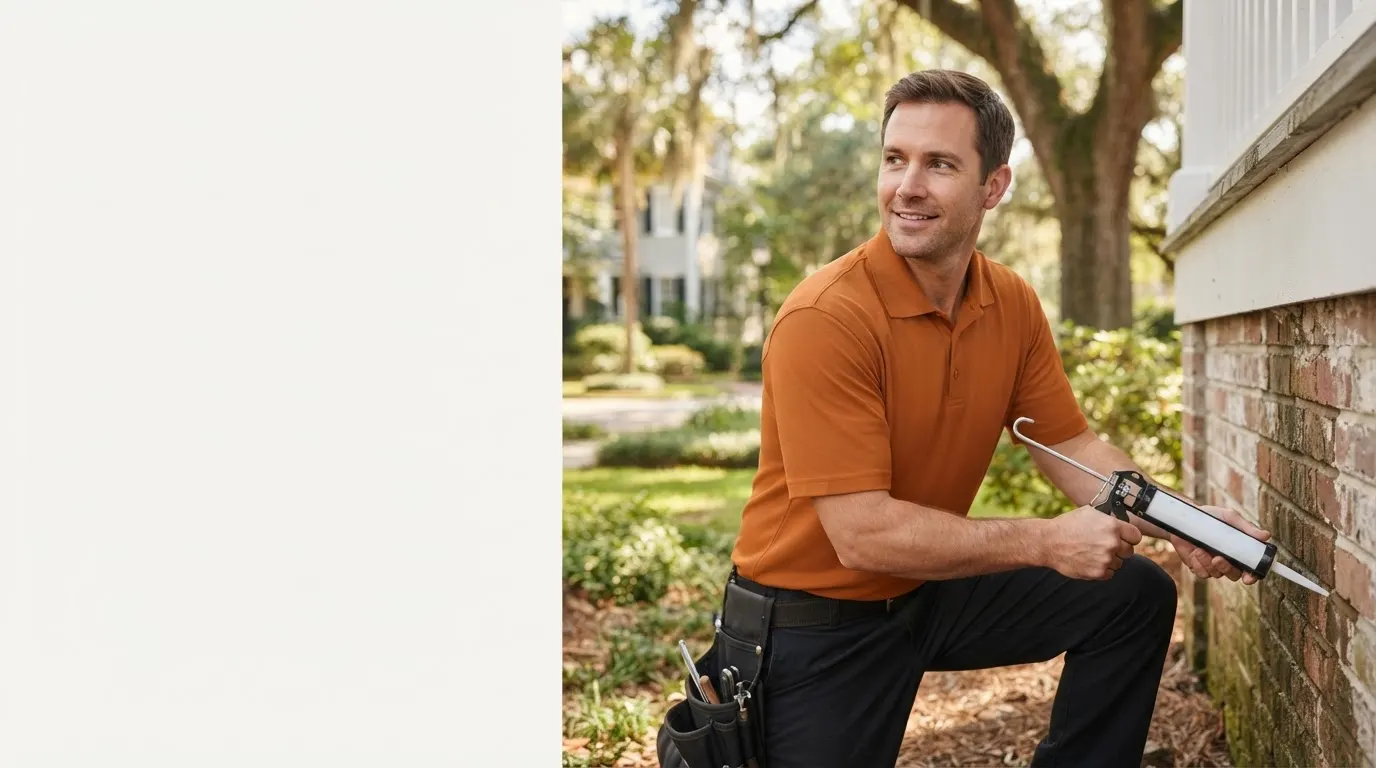
Pest Control Service company in Charleston is a specialized structural inspection and environmental management operation that eliminates regional insects, subterranean termites, and coastal rodents using targeted barrier applications and physical crawlspace exclusion.
Every service reflects the same meticulous attention to detail, whether it's a single job or a larger pest control service project across Charleston.
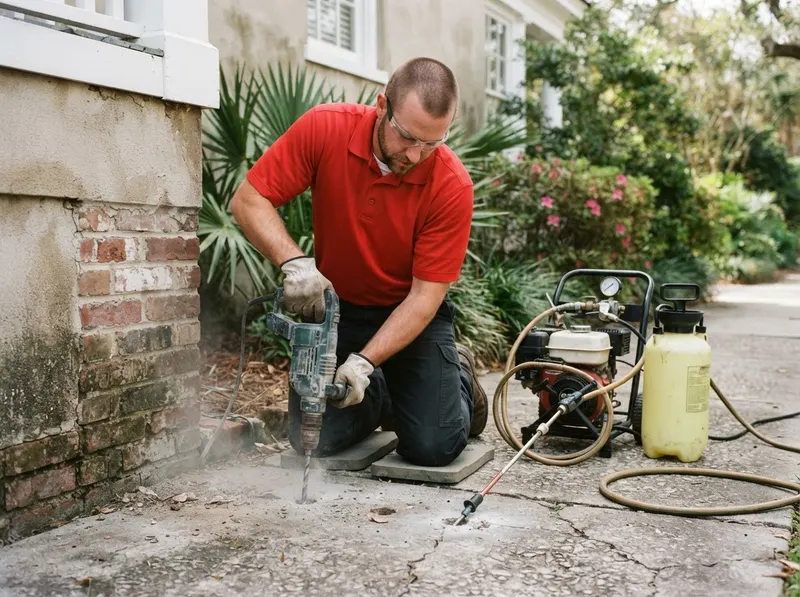
Subterranean termite control utilizes non-repellent termiticides applied directly to perimeter foundation soils and crawlspace pier arrays. Soil trenching creates a continuous liquid defense boundary matching strict Clemson University Regulatory Services standards. The treatment targets eastern subterranean termites and destructive Formosan colonies that enter historical structures through micro-fissures in historic mortar. Technicians monitor crawlspace wood moisture levels using calibrated resistance meters, treating affected framing with disodium octaborate tetrahydrate to halt fungal decay and cellulose consumption. Standalone curative soil treatments start at $950, determined by total foundation linear footage. Liquid barrier applications establish an uninterrupted zone around concrete footings, brick piers, and crawlspace curtain walls, preventing subterranean workers from traveling between soil colonies and subfloor joists. Non-repellent active ingredients like fipronil transfer throughout foraging termite networks during grooming, eliminating cryptic colonies before structural framing sustains unrecoverable hollow channels. Routine post-treatment monitoring incorporates visual inspections along crawlspace grade lines and sill plates to confirm that physical ground movement or landscape grading has not broken the continuous soil defense envelope.
Get a quote →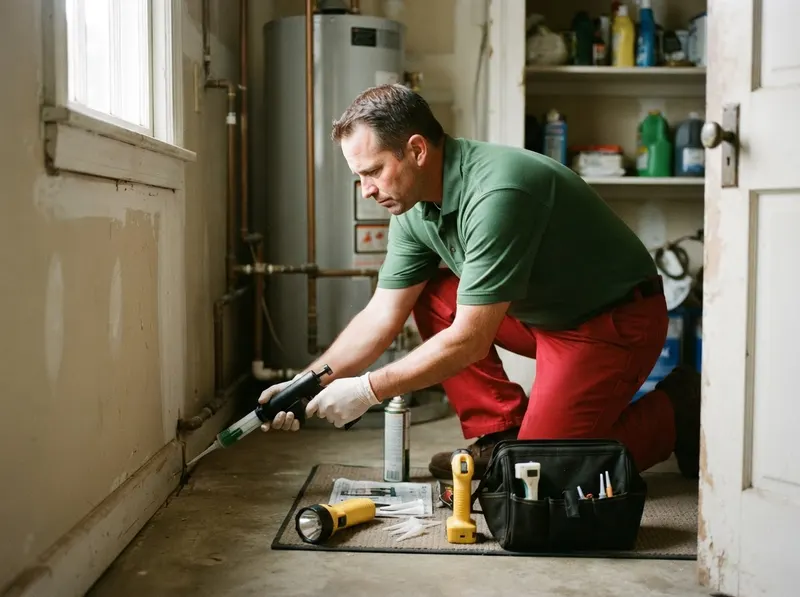
American and smokybrown cockroach management addresses perimeter harborage in pine straw, mulch beds, and live oak canopies. Technicians apply long-lasting, water-resistant micro-encapsulated suspensions to exterior brick ledges, weep holes, and crawlspace access vents. Interior crack-and-crevice treatments utilize synthetic pyrethroids and insect growth regulators compliant with the Environmental Protection Agency registration benchmarks. This targeted strategy prevents insects from penetrating attic knee walls, subfloors, and plumbing chases during periods of coastal humidity. Initial corrective treatments start at the $300 diagnostic and treatment minimum. Large peridomestic cockroaches frequent warm, moist voids behind exterior cladding, venturing into finished spaces through utility chases, gaps around dryer vents, and unsealed door thresholds. Micro-encapsulated formulations adhere to coarse masonry, maintaining chemical stability even when subjected to intense coastal rainstorms and extreme midday ultraviolet radiation. Interior gel baits placed within discreet cabinetry voids target nymphs and adult foragers directly at nesting harborage zones, eliminating indoor breeding populations without exposing open living spaces to airborne chemical residues.
Get a quote →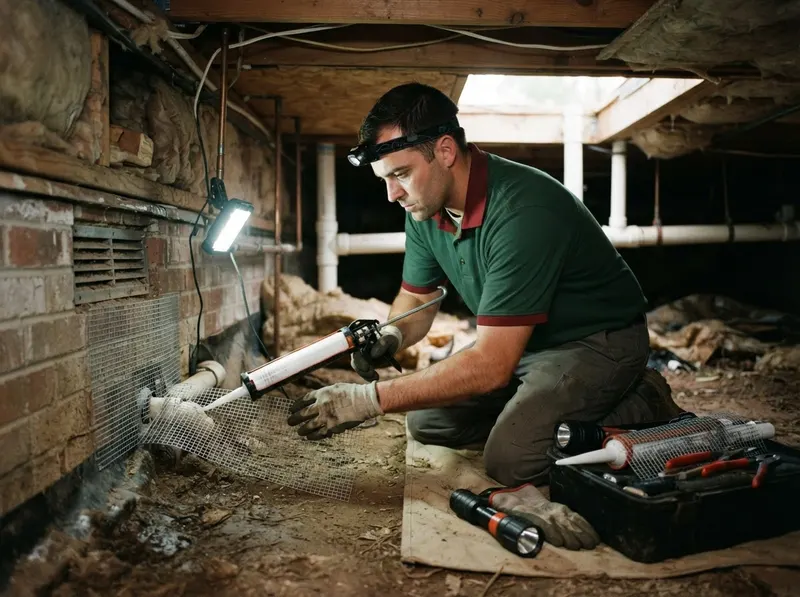
Rodent exclusion seals structural entry pathways utilized by roof rats and Norway rats migrating from tidal marsh borders into residential subfloors. Technicians install quarter-inch 19-gauge galvanized hardware cloth over missing foundation grates, exterior vents, and open sill plate junctions. Specialized copper mesh fills mortar voids around historic plumbing penetrations, eliminating pathways without restricting cross-ventilation guidelines defined by the South Carolina Building Codes Council . Mechanical snap traps remove active populations from conditioned crawlspaces and attics without broadcast rodenticides. Comprehensive exterior exclusion programs start at $450. Rodents exploit subfloor insulation for nesting material and gnaw on low-voltage structural wiring, introducing serious fire hazards behind drywall. Exclusion technicians execute a comprehensive crawlspace perimeter survey, sealing gaps as small as one-quarter inch around gas line entries, air conditioning refrigerant chases, and perimeter crawlspace doors. Follow-up trap-clearing visits remove trapped specimens, verify seal integrity, and ensure complete mechanical eradication without using hazardous secondary-poisoning rodent baits near local wildlife.
Get a quote →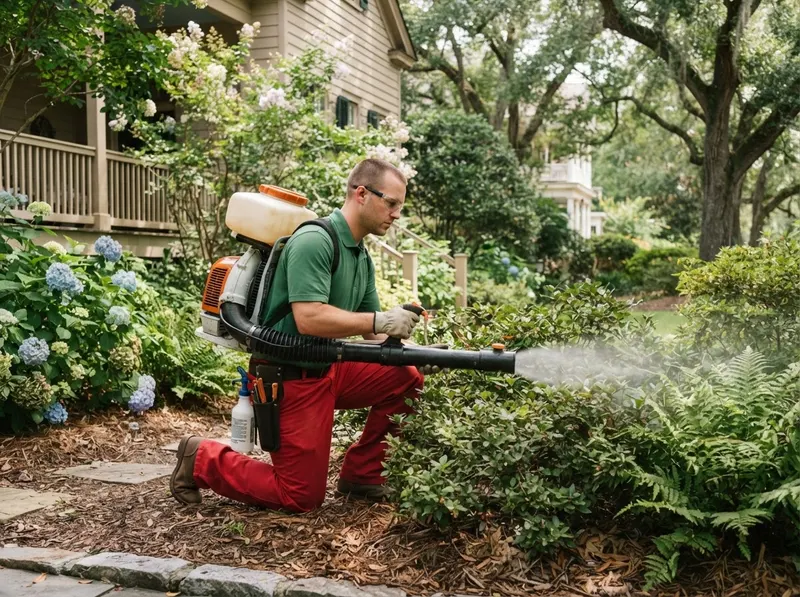
Mosquito perimeter mitigation reduces adult biting populations across landscaped outdoor areas, palmetto groves, and low-lying perimeter drainage zones. Motorized air-blast mist blowers disperse botanical oil solutions or encapsulated pyrethrins along shaded foliage understories. Larvicidal briquettes containing Bacillus thuringiensis israelensis treat standing water in drainage ditches, French drains, and catch basins consistent with Centers for Disease Control and Prevention integrated vector management guidelines. Seasonal applications disrupt mosquito reproduction cycles from early spring through autumn. Targeted standalone landscape misting treatments start at $300. Biting insect treatments specifically target adult resting harbors on the undersides of dense broadleaf shrubbery, ornamental grasses, and beneath elevated porches or deck footings. Residual insect growth regulators halt juvenile mosquito development inside unmaintained rain collection barrels, decorative fountains, and yard sumps. Routine barrier maintenance across high-humidity seasons dramatically reduces adult landing counts, allowing property owners to utilize outdoor living spaces safely without causing runoff into sensitive marsh borders.
Get a quote →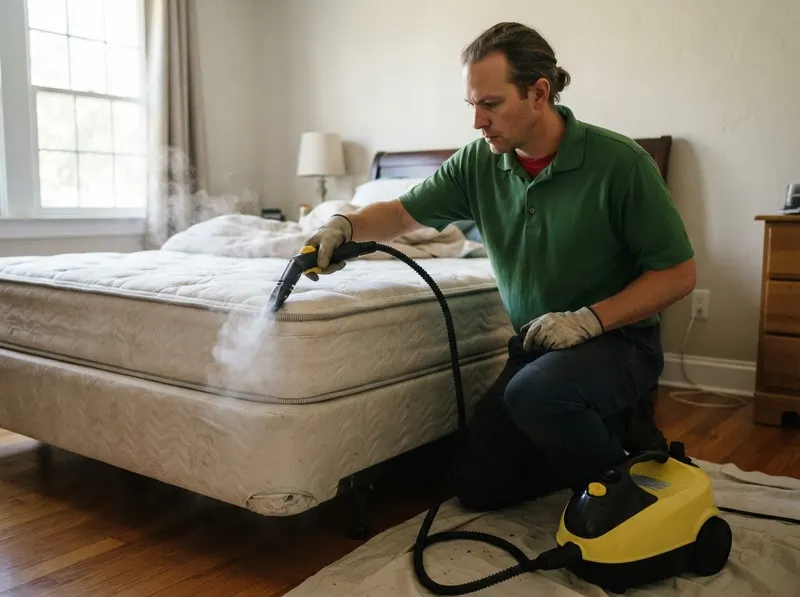
Bed bug eradication programs eliminate Cimex lectularius populations across residential properties and busy coastal hospitality units. The protocol combines targeted high-temperature dry steam applications exceeding 160 degrees Fahrenheit with residual juvenile hormone analogs applied along mattress seams, headboards, and perimeter baseboards. Structural crack-and-crevice treatments conform to integrated pest management frameworks established by the National Pest Management Association . Detailed post-treatment inspections confirm complete egg and nymph eradication. Dedicated multi-room residential bed bug remediation programs start at $650. Bed bugs hide inside electrical outlets, upholstered furniture seams, behind crown molding, and within hardwood floor gaps, resisting generic aerosol retail sprays. Dry superheated steam penetrates deep into fabric folds and screw recesses, delivering immediate contact mortality for heat-sensitive adult insects and developing eggs. Follow-up inspections utilize focused lighting and magnifying instrumentation to verify zero insect presence across treated sleeping areas and baseboards.
Get a quote →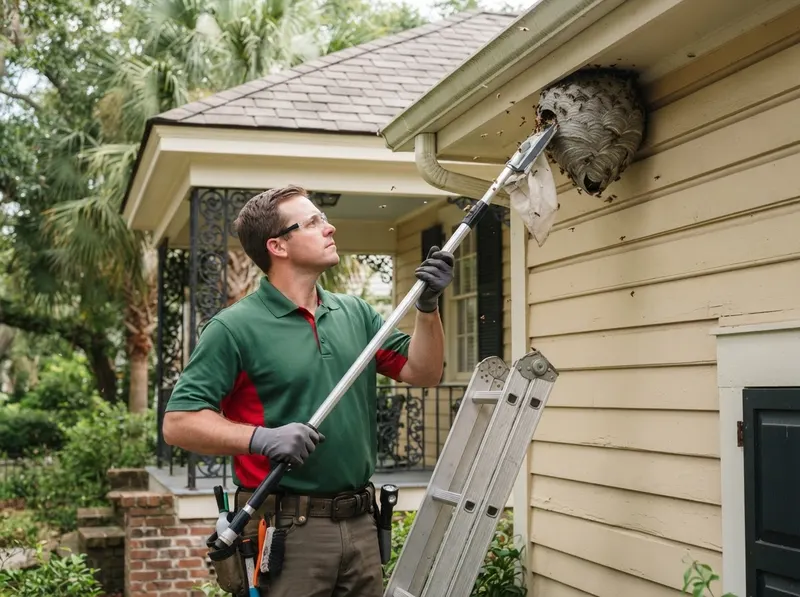
Stinging insect management removes aggressive paper wasp, yellowjacket, and hornet colonies nesting in roof eaves, soffit recesses, and porch ceilings. Specialized aerosol freezing compounds and localized botanical dusting agents neutralize active colonies safely. Technicians physically detach paper comb structures and treat attachment zones with repellent residual sprays to discourage subsequent nesting cycles. All application techniques follow worker safety guidelines established by the Occupational Safety and Health Administration . Direct physical removal of exterior structural nests starts at $300. Paper wasps and bald-faced hornets construct expansive fibrous paper nests under second-story fascia, porch headers, and crawlspace entry frames, defending nesting zones aggressively against human approach. Technicians wear protective sting suits and utilize telescoping applicator poles to inject micro-fine insecticidal dusts into subterranean yellowjacket burrows and exterior wall voids. Once workers confirm that colonial activity has ceased, they mechanically scrape structural surfaces clean to remove residual pheromone trails that attract future queens.
Get a quote →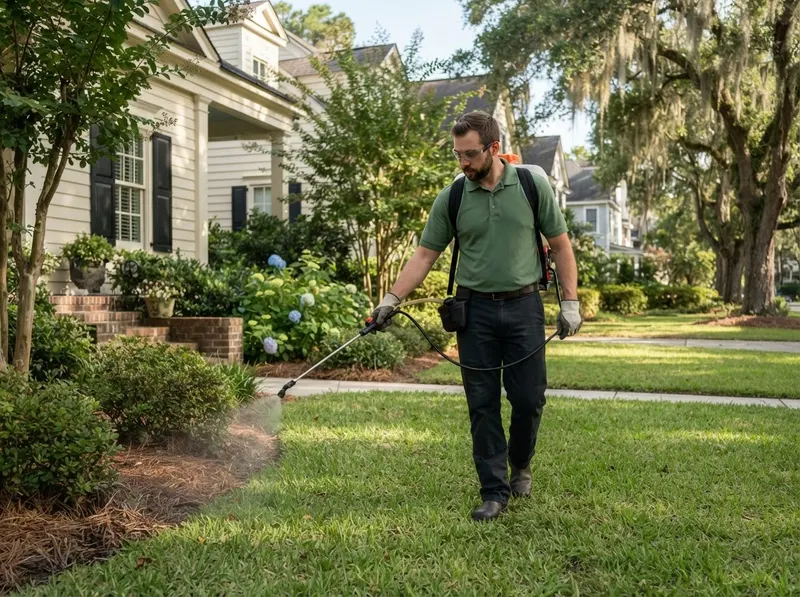
Flea and tick yard treatments control Ctenocephalides felis and Amblyomma americanum populations across shaded turf, ground covers, and property boundaries. Technicians distribute granular insect growth regulators paired with water-activated residual perimeter sprays to eliminate larvae, nymphs, and active adults. The protocol mitigates parasitic transfer vectors for outdoor pets, addressing tick harborage near maritime brush lines as directed by the South Carolina Department of Health and Environmental Control . Comprehensive exterior lawn and foundation treatments start at $325. Fleas and lone star ticks congregate along perimeter fence lines, beneath shaded crawlspace skirts, and under coastal pine canopies where domestic pets and suburban wildlife bed down. Integrated applications apply adulticides that kill active blood-feeding ticks on contact while insect growth regulators break the reproductive cycle by halting larval pupation in sandy soils. Regular seasonal barrier treatments preserve safe, bite-free turf zones around outdoor patios, reducing the risk of tick-borne pathogens.
Get a quote →Excess moisture in coastal subfloors drives wood-destroying insect infestations and microbial wood decay. Technicians install heavy-duty 12-to-20 mil reinforced polyethylene vapor barriers across exposed dirt crawlspaces, sealing seams with specialized moisture-resistant tape. Foundation vent covers and commercial crawlspace dehumidifiers maintain relative humidity levels below 60 percent, meeting standards set by the American Society for Testing and Materials . Subfloor timber treatments neutralize active surface fungal growth while deterring subterranean termite colonization. Complete crawlspace encapsulation and moisture remediation programs start at $1,200. High ambient humidity migrating upward from damp soil raises framing timber moisture content above 20 percent, triggering structural decay fungi and providing ideal colonization conditions for subterranean termites. Crews clear organic ground debris, grade the soil footprint, and install thick, puncture-resistant membrane liners up foundation piers and masonry perimeter walls. Integrating commercial low-temperature dehumidification systems stabilizes subfloor framing, permanently preventing framing decay, wood rot, and opportunistic crawlspace insect infestations.
Get a quote →You get a firm, itemized quote for your pest control service before any work begins, no surprises, no pressure.
Careful prep, tidy work, and a full cleanup when we are done. We treat your home and belongings like our own.
The same trusted, background-checked team from the first call to the final check.
If you observe active indoor insect pressure such as American cockroaches emerging around baseboards, choose an immediate targeted interior cleanout paired with a micro-encapsulated foundation wash; if your objective is seasonal preservation against subterranean wood destruction, select an external liquid non-repellent perimeter trench coupled with crawlspace pier baiting. The practical trade-off centers on upfront mechanical labor versus maintenance frequency: exterior perimeter barriers and crawlspace entry-point exclusions require a higher initial physical investment starting at $300 to $950, but eliminate the chemical load and scheduling disruption of recurring monthly indoor chemical sprays. When deciding between structural rodent trapping versus exterior physical exclusion, trapping removes the immediate nesting population within attics or crawlspaces, whereas complete architectural sealing using galvanized steel mesh permanently denies entry from salt marsh buffers.
Exterior exclusions require detailed architectural retrofitting across soffits, foundation vents, and plumbing penetrations, offering lasting prevention rather than perpetual, indefinite trapping visits. Selecting a single targeted curative treatment solves acute seasonal swarms without ongoing financial obligations, whereas seasonal preventative maintenance visits scheduled around regional insect breeding spikes provide structured monitoring for vulnerable historic timber foundations. For homeowners managing high indoor humidity alongside pest pressure, combining structural wood-decay treatments with heavy crawlspace vapor barriers provides an integrated solution: the vapor retarder halts upward soil moisture diffusion, while borate infusions protect subfloor sills from powderpost beetles and fungal spores.
Opting solely for surface-level chemical spraying leaves the underlying timber moisture unresolved, meaning wood-destroying organisms can persist undetected above damp crawlspace ground soil. Property owners who implement targeted structural exclusion avoid the repeated disruption of interior baseboard spraying while achieving durable, physical protection that withstands coastal South Carolina weather cycles.
Every project gets a firm, written price after a free on-site visit. Ranges below for orientation.
Tell us about your pest control service job and we'll send a clear, written quote, usually the same day. Or just call and talk to a real Charleston pro.
(843) 268-6994
Charleston's high water table, dense marshland borders, and extensive historical heart pine architecture create extreme subterranean termite pressure, particularly from invasive Formosan colonies. In historic areas from South of Broad to Radcliffeborough, raised brick-and-mortar foundations frequently sustain high humidity, driving palmetto bugs and dampwood pests into structural floor framing. Across maritime river environments like Daniel Island, James Island, and the Cainhoy Peninsula, warm coastal brackish water accelerates seasonal mosquito reproduction, requiring targeted perimeter barriers that preserve sensitive tidal ecosystems. Properties situated near the Ashley and Cooper rivers routinely experience intense rodent migrations as seasonal king tides submerge marsh grasses, driving roof rats into elevated crawlspaces, historic attic knee walls, and HVAC soffits. The humid maritime climate also exposes crawlspace sills along older avenues like Meeting Street and Rutledge Avenue to wood-destroying powderpost beetles and decay fungi, necessitating active timber moisture monitoring rather than simple surface chemical applications. Modern developments in West Ashley and Mount Pleasant face persistent Argentine and fire ant pressures along sandy landscaping beds, where standard consumer insecticides leach away during afternoon summer downpours. By formulating specialized micro-encapsulated treatments and executing robust physical exclusion barriers, properties throughout the Lowcountry achieve deep, structural pest security while safeguarding sensitive coastal waterways.
Free estimates for Charleston & the surrounding area.
 WillowCrest Pest Management