Charleston crawlspaces present unique vulnerabilities due to high coastal water tables, open foundation venting, and historical timber framing. In historic districts like South of Broad, Harleston Village, and…
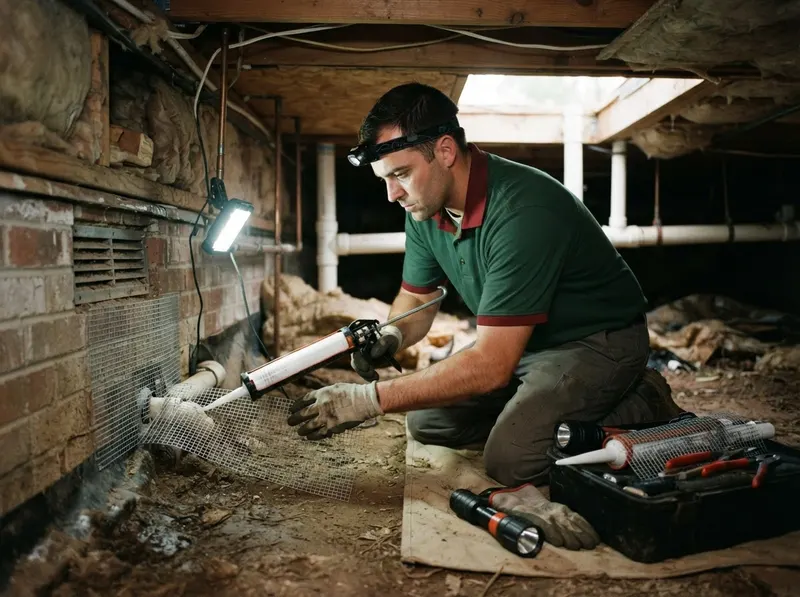
Charleston crawlspaces present unique vulnerabilities due to high coastal water tables, open foundation venting, and historical timber framing. In historic districts like South of Broad, Harleston Village, and Radcliffeborough, brick pier foundations often settle, opening gaps larger than 0.25 inches between timber sills and brick footers. According to the Centers for Disease Control and Prevention guidance on rodent exclusion, rodents can squeeze through openings as small as a dime, making foundation gaps primary highway corridors for pests escaping King Street flooding or marshland tide surges. Structural exclusion focuses entirely on long-term physical defense rather than temporary toxic baiting. Field technicians seal exterior masonry voids with hydraulic mortar, install galvanized hardware cloth along perimeter ground vents, and secure utility penetrations where plumbing lines rise toward kitchens and bathrooms. This process preserves the integrity of heart-pine framing while eliminating pest entry points without broadcasting rodenticides that can harm local birds of prey or domestic pets.
Properties situated along tidal marshes in West Ashley, James Island, and the Cainhoy Peninsula frequently encounter roof rats nesting inside subfloor fiberglass insulation. The Clemson University Cooperative Extension documents that elevated relative humidity in Lowcountry crawlspaces accelerates wood rot, which invites burrowing pests into weakened framing. To prevent moisture entrapment while repelling rodents, exclusion barriers must maintain passive airflow through existing foundation vents as prescribed by the U.S. Department of Housing and Urban Development crawlspace ventilation standards. Rather than blocking passive foundation airflow with expanding spray foams, which rodents chew through within 48 hours, technicians secure 23-gauge or 19-gauge ASTM International compliant galvanized hardware cloth directly to foundation framing with mechanical fasteners. This barrier withstands the corrosive salt air near The Battery and White Point Garden while physically stopping gnawing teeth.
Choosing permanent physical exclusion over continuous rodenticide bait stations resolves reinfestation at the structural boundary. When property owners rely strictly on recurring poison bait boxes, rodents feed on the active ingredients and crawl deep into inaccessible subflooring cavities or HVAC ductwork before dying, causing severe odor issues and fly breeding cycles in humid summer weather. Mechanical exclusion requires an upfront capital investment, but it permanently eliminates the requirement for binding service agreements. In modern master-planned communities like Daniel Island or bungalow neighborhoods like Wagener Terrace, crawlspace piping penetrations and electrical runs through foundation stem walls create direct pathways into living spaces. Sealing these passages with copper mesh, stainless steel escutcheon plates, and non-shrink structural grout stops migration paths immediately.
1. A technician conducts a 360-degree foundation assessment, measuring all gaps along sill plates, crawlspace access hatches, and HVAC chases. 2. Technicians install heavy-gauge steel barriers across exterior foundation vents and mechanically seal interior plumbing drops with copper mesh and mortar. 3. Trapping mechanisms are deployed inside the sealed crawlspace to capture any residual pests trapped behind the newly secured perimeter barrier. 4. Following a 7-day monitoring interval, technicians conduct a secondary audit to confirm complete subfloor clearance before documenting the restored structural boundary.
Every job gets a firm, written price after a free on-site visit.
Tell us about your crawlspace rodent exclusion job in Charleston and we'll send a clear, written quote, usually the same day.
 WillowCrest Pest Management